CASE STUDY / BRAND STRATEGY + IDENTITY + CAMPAIGN
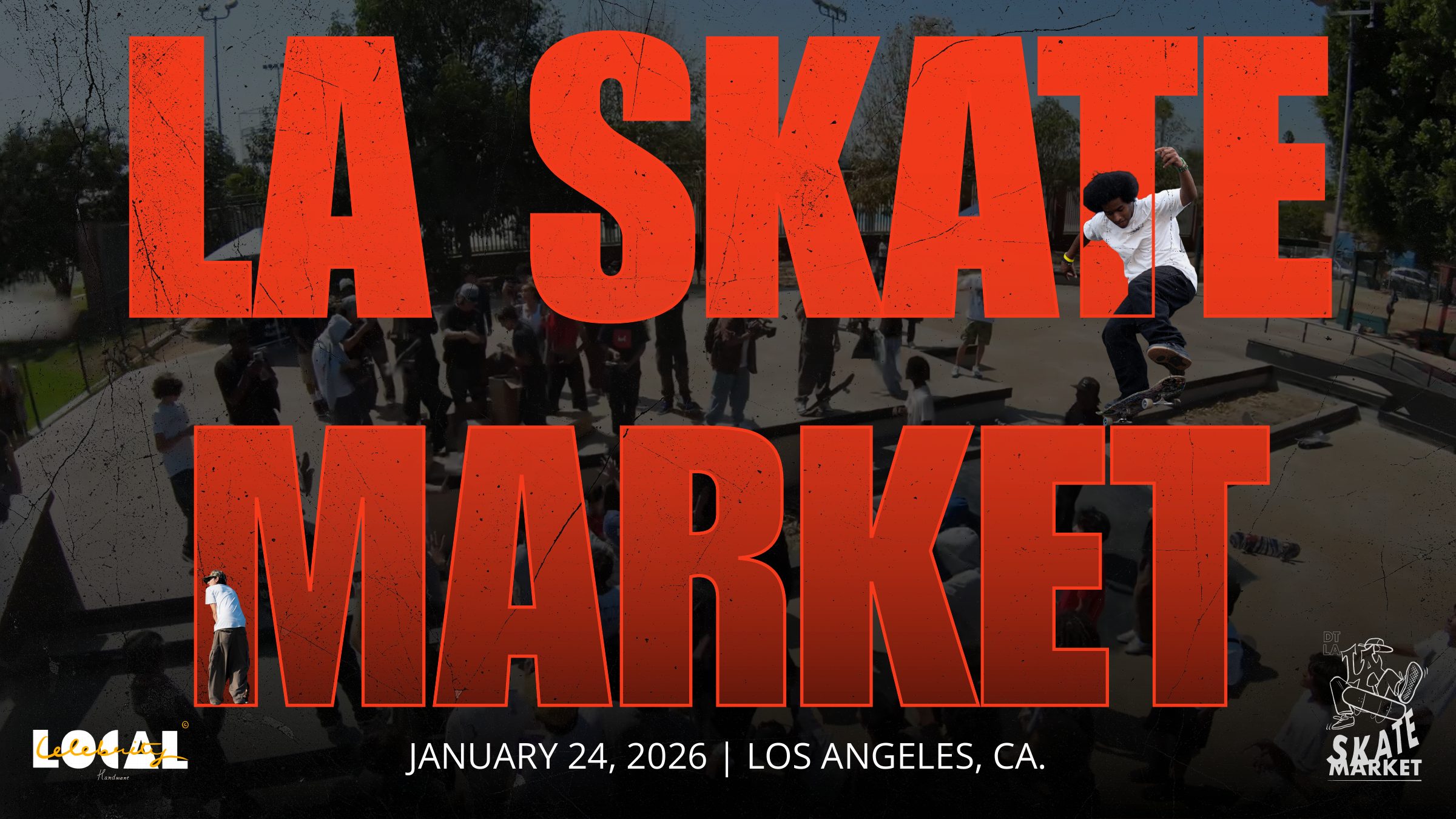
LA SKATE
MARKET
A grassroots skate event became a sharper, sponsor-ready cultural brand — without losing the energy, texture or community that made it matter.
- CLIENT
- LA Skate Market
- SECTOR
- Skate · Culture · Events
- SERVICES
- Brand Strategy · Identity · Deck Design
- SCOPE
- Brand Platform · Sponsor Story · Campaign
THE OPPORTUNITY
THE EVENT ALREADY HAD
THE ENERGY. THE BRAND
NEEDED TO CATCH UP.
LA Skate Market had the ingredients of a real cultural platform: skaters, artists, vendors, music and a community that already showed up. The challenge was to turn that momentum into a clear, ownable brand that could grow year after year — and communicate just as confidently to sponsors as it did to the people it served.
POSITION THE PLATFORM
DEFINE WHAT LA SKATE
MARKET STANDS FOR.
The brand story starts by framing LASM as more than a one-day event: a community-driven platform connecting skateboarding, art, music, independent brands and Los Angeles culture.
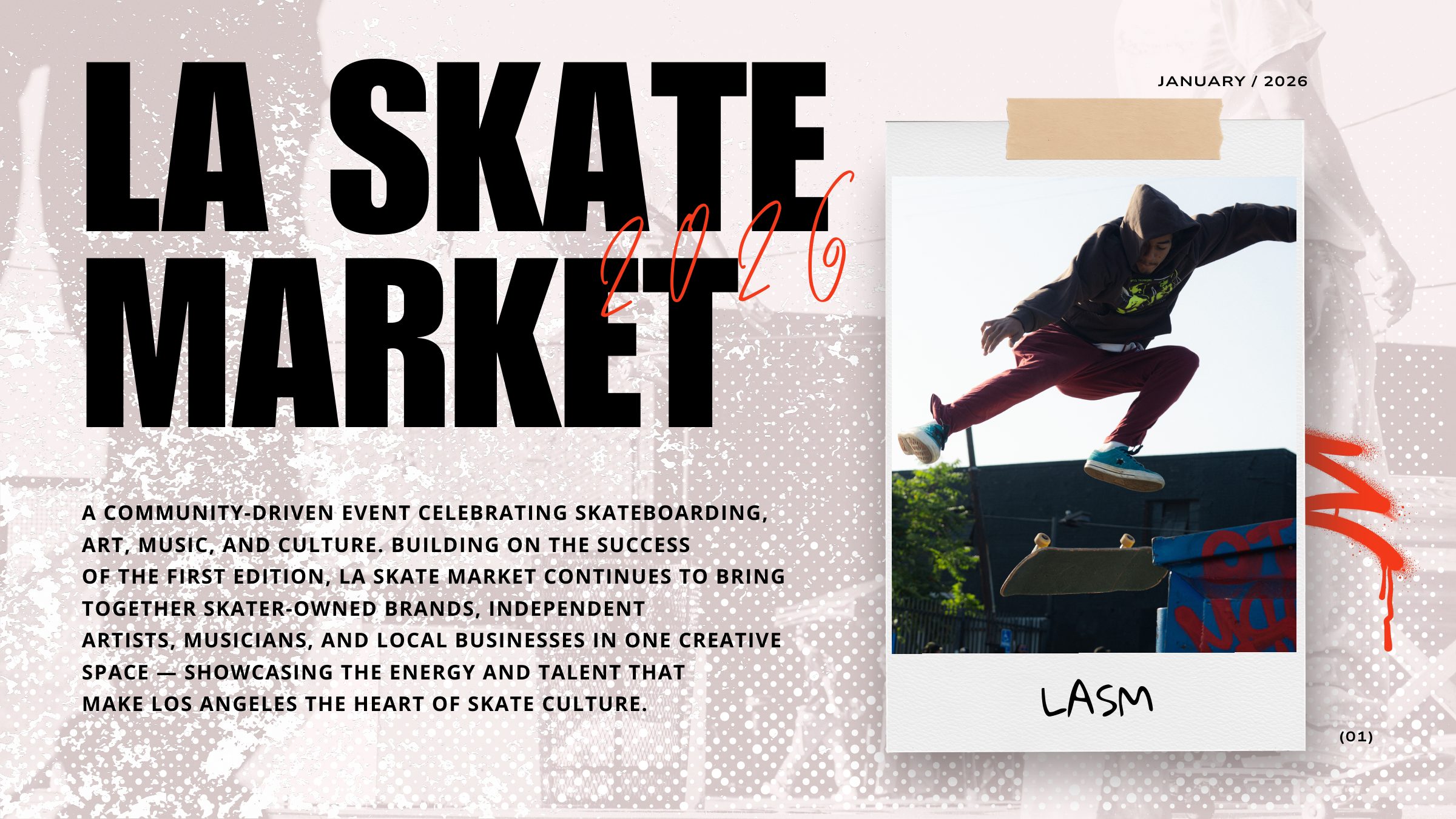
THE BRAND SYSTEM
GRITTY ENOUGH FOR SKATE CULTURE.
CLEAR ENOUGH TO SCALE.
The visual system balances raw skate energy with enough structure to work across sponsorship, event communications and future brand touchpoints.
01
TYPE WITH ATTITUDE
Oversized condensed typography gives the brand immediacy, impact and a poster-like presence.
02
TEXTURE + COLLAGE
Distressed type, torn-paper details and layered photography keep the work tactile and culturally grounded.
03
CONTROLLED CONTRAST
Black, warm white, hot red and acid-lime accents create a system that feels bold without becoming visually chaotic.
THE POINT OF VIEW
THE COMMUNITY ISN’T
THE AUDIENCE. IT’S THE BRAND.
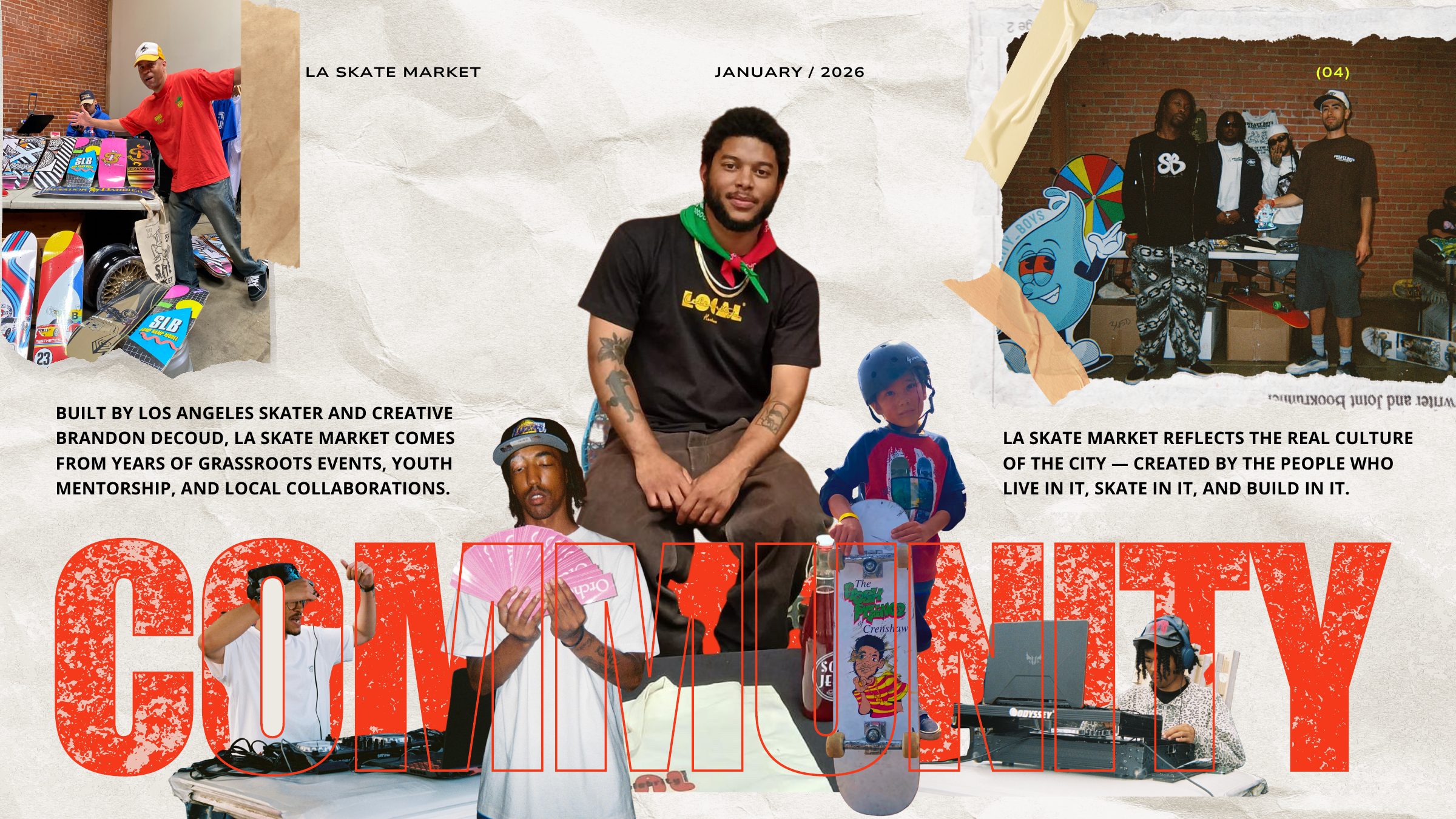
LASM works because it is built by the same people it exists to serve. The identity had to make that visible — local, participatory and unmistakably rooted in Los Angeles skate culture.
PROOF OF MOMENTUM
THE BRAND HAD REAL
TRACTION TO BUILD ON.
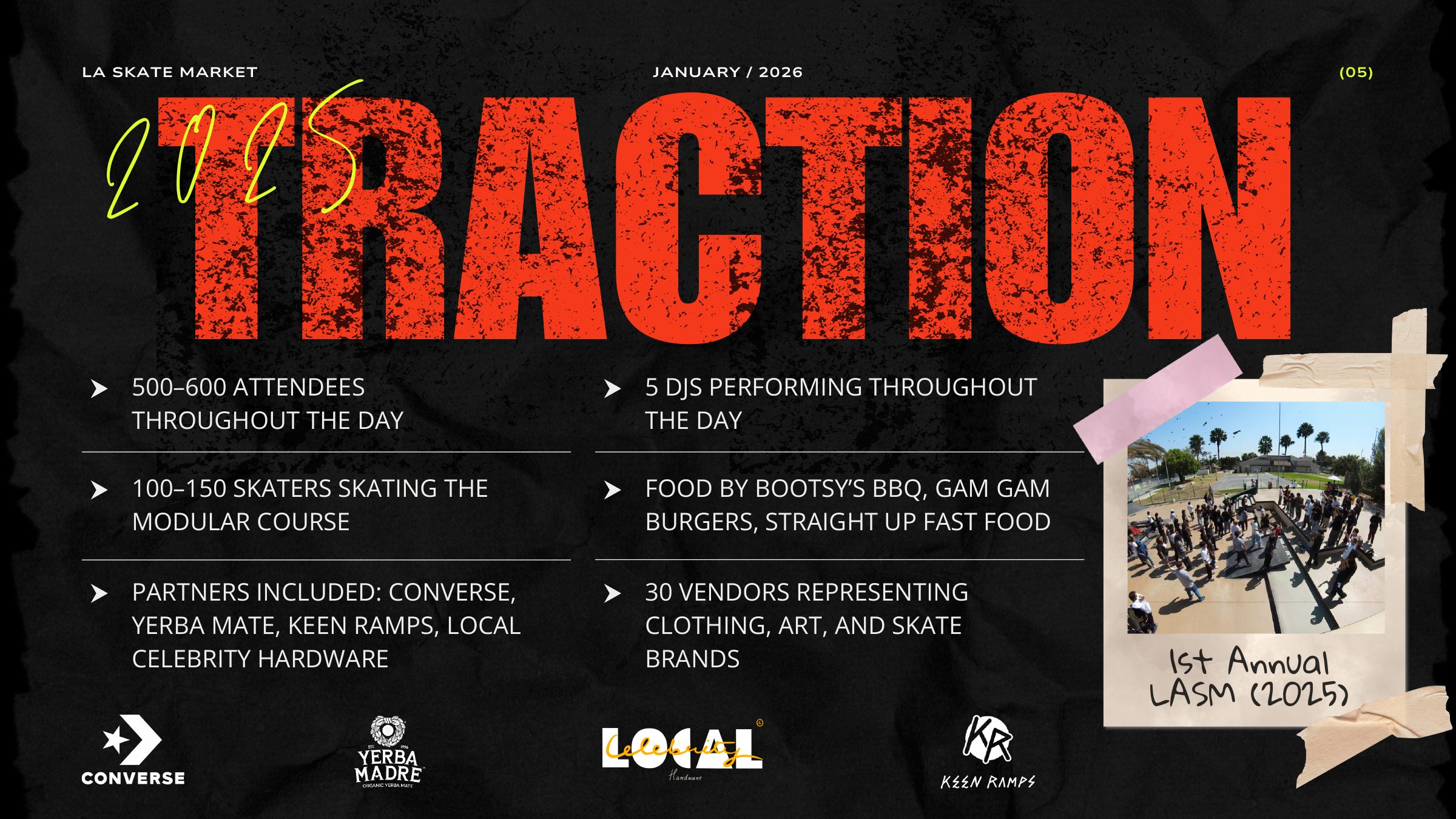
The previous edition had already proven demand. The 2026 branding initiative gave LASM a stronger way to present that momentum and turn community participation into credibility.
500–600
ATTENDEES
100–150
SKATERS
30
VENDORS
5
DJS
BRAND IN BUSINESS
SPONSOR-READY
WITHOUT FEELING CORPORATE.
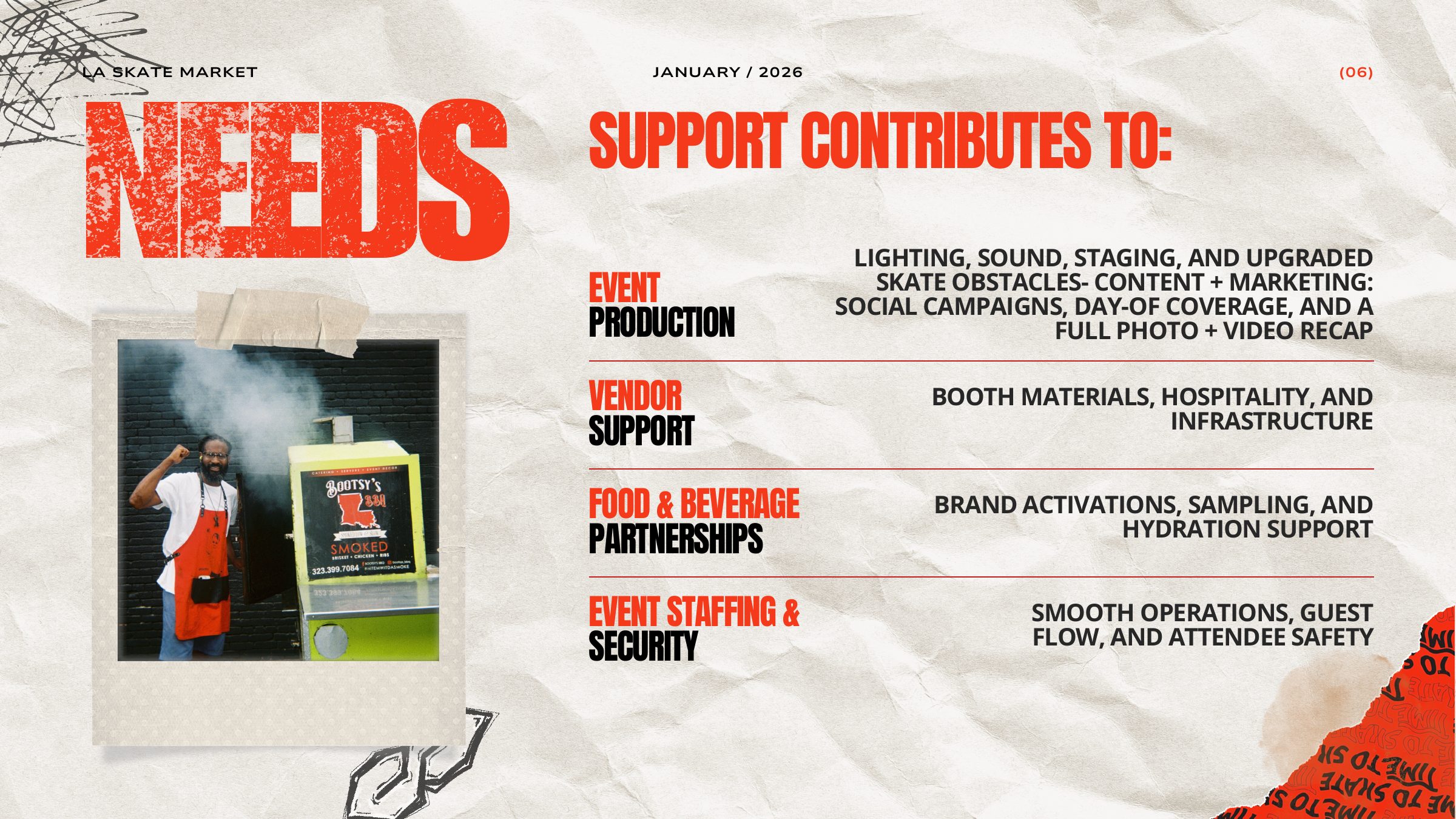
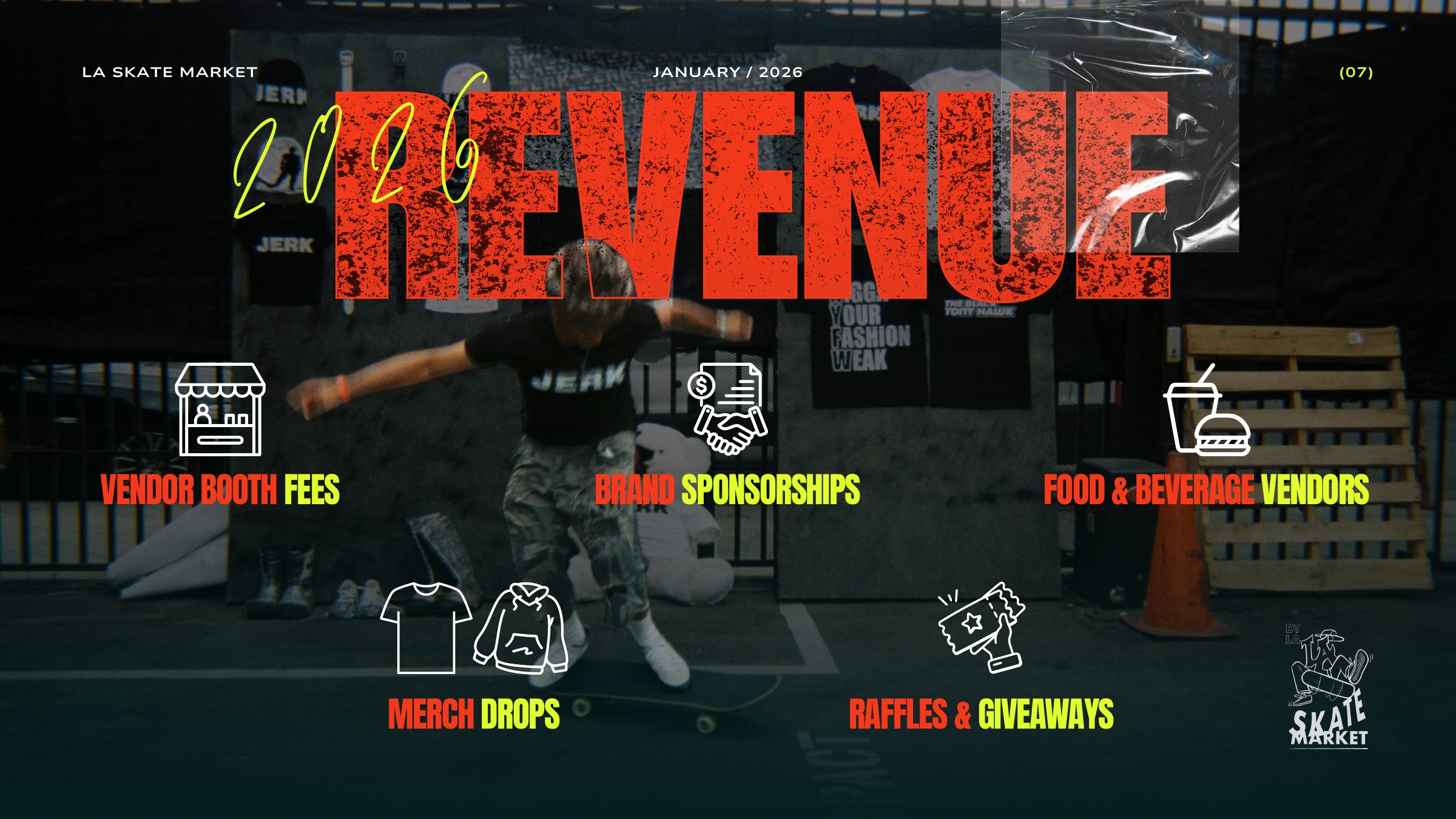
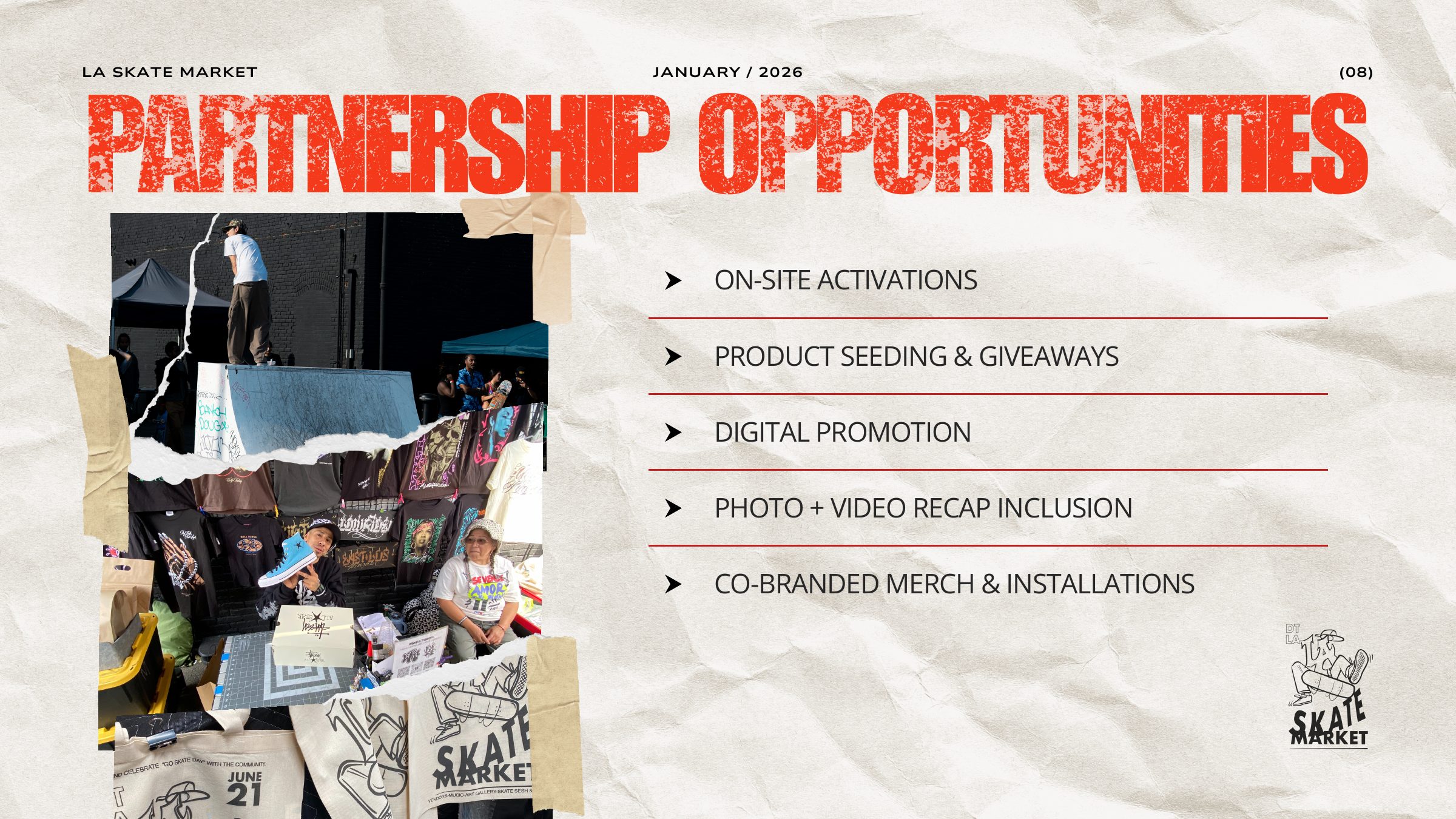
The sponsorship deck extended the same brand language into a clear business-development tool. It showed prospective partners what LASM stood for, what the audience looked like, where support was needed and how a brand could participate without flattening the culture.
THE RESULT
A CULTURAL BRAND
THAT COULD COMMAND
MORE ATTENTION.
The initiative gave LA Skate Market a cohesive visual and verbal platform for the event, its community and its sponsor story. The deck helped secure Converse as a sponsor, and hundreds of people came out for the event.
01
BRAND CLARITY
A cohesive identity and message system made LASM feel like a repeatable cultural property, not a one-off event.
02
SPONSOR CONFIDENCE
Partners could quickly understand the mission, traction, needs and activation opportunities.
03
EVENT MOMENTUM
Converse sponsored the event and hundreds of people attended.
THE BRAND SYSTEM IN USE
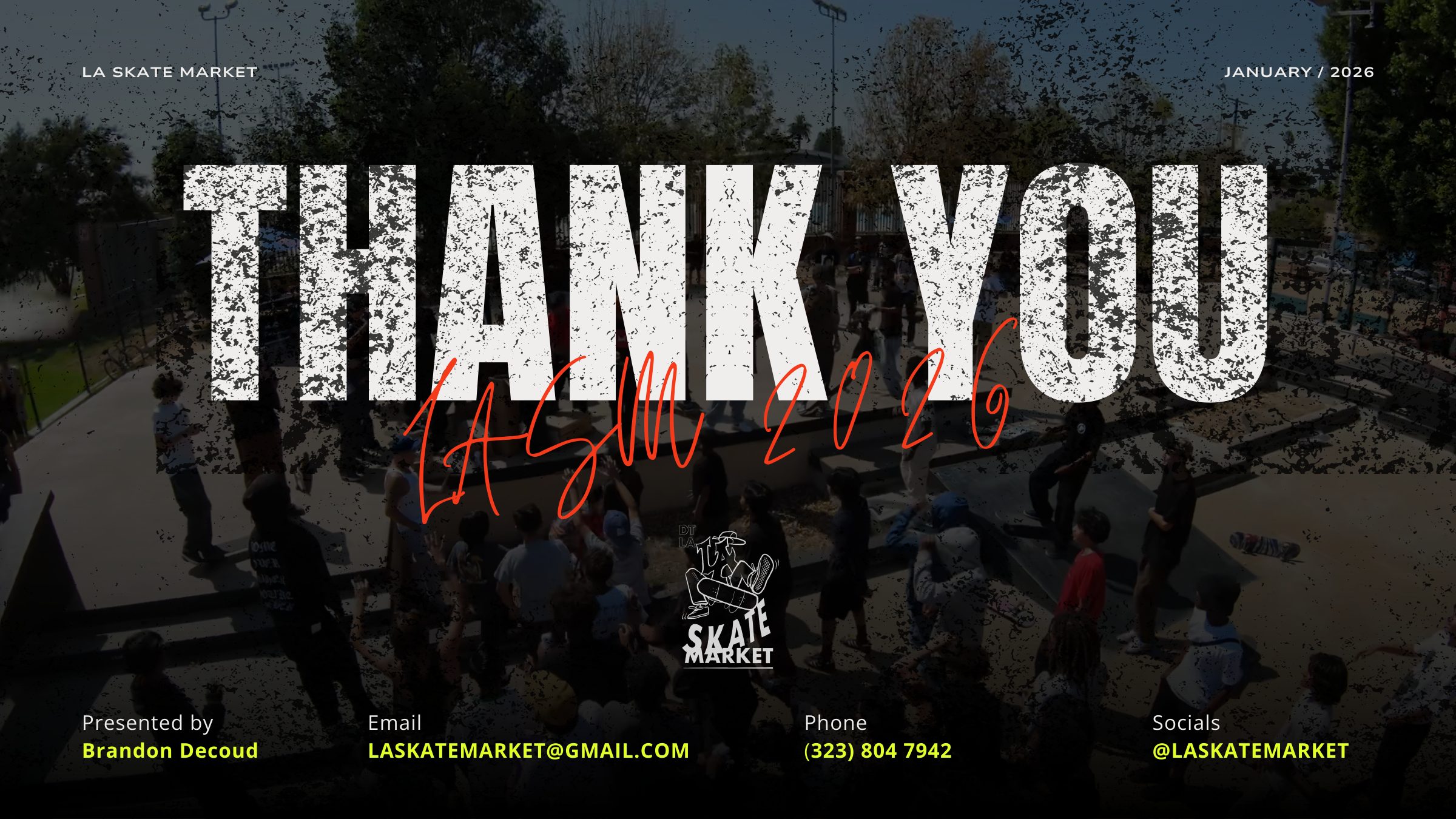
TEN PAGES.
ONE VISUAL LANGUAGE.
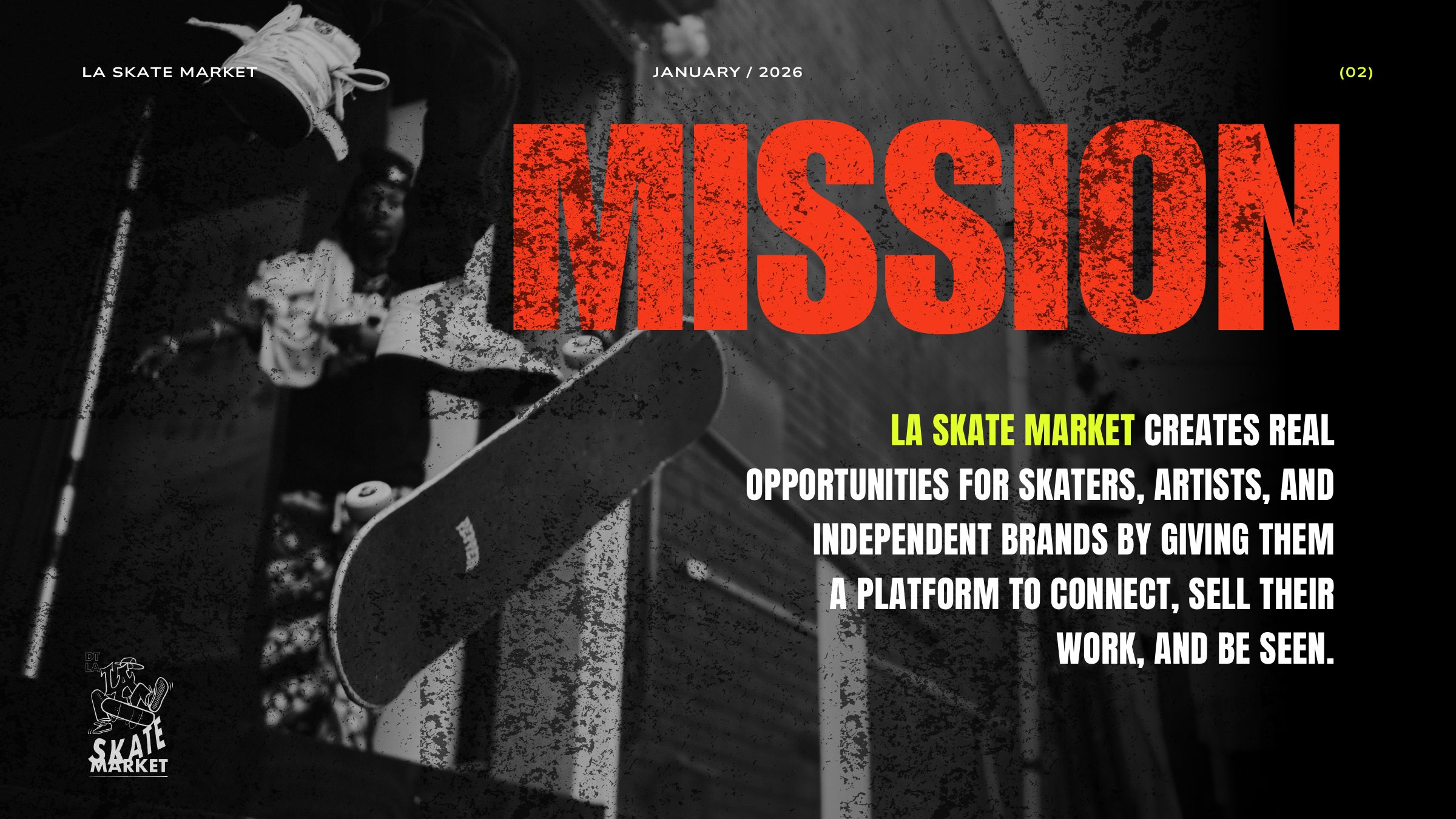
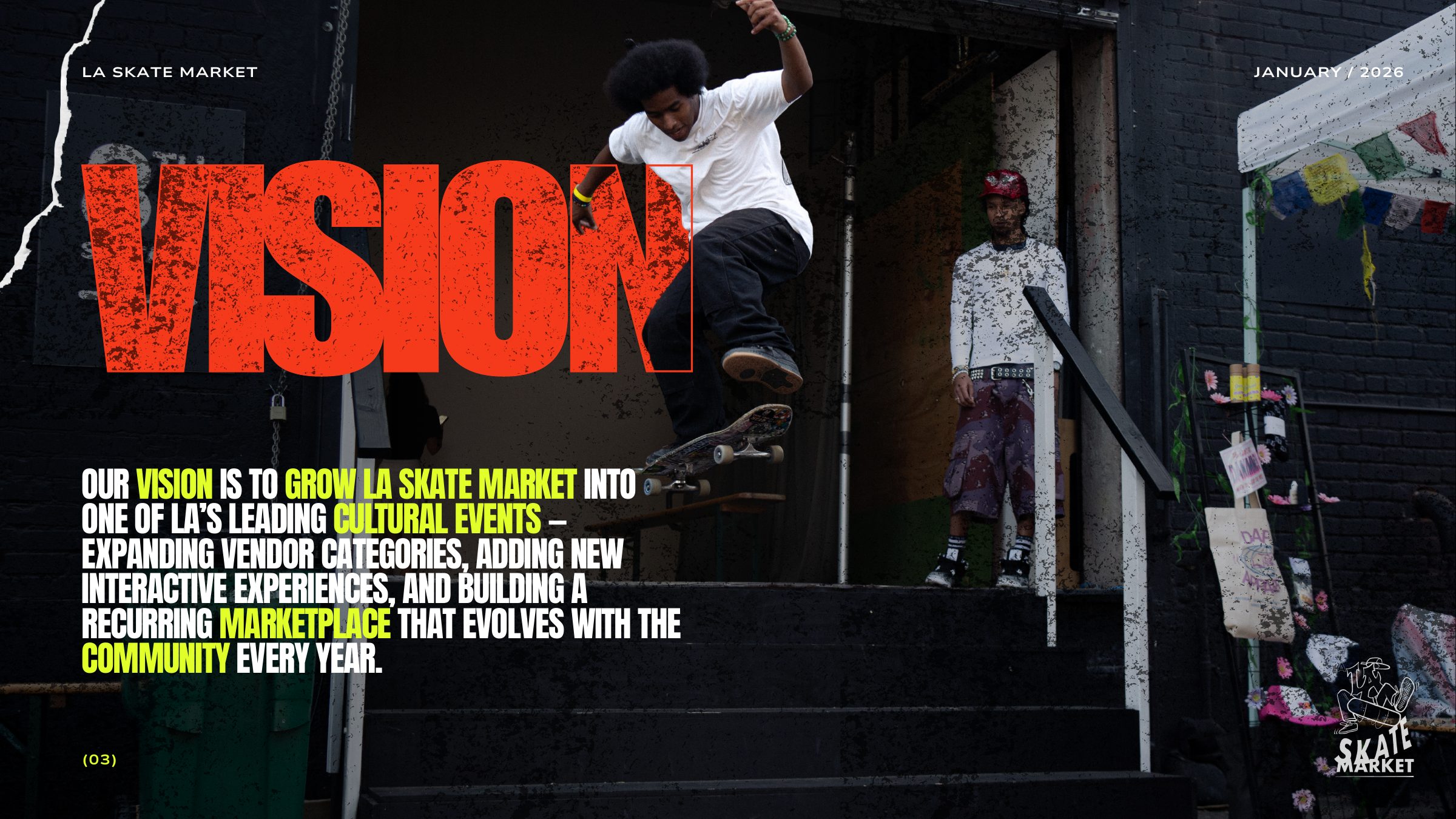
Across the full deck, the system flexes between photography, type, collage and information design without losing the same recognizable voice.
WHAT CHANGED
FROM A GREAT EVENT
TO A STRONGER BRAND.
The work made LA Skate Market easier to recognize, easier to understand and easier to support — while keeping the visual language rooted in the culture that built it.
NEXT PROJECT
Inglewood Open StudiosCASE STUDY / BRAND STRATEGY + IDENTITY
LA SKATE
MARKET
A grassroots skate event became a sharper, sponsor-ready cultural brand.
- CLIENT
- LA Skate Market
- SECTOR
- Skate · Culture · Events
- SERVICES
- Brand Strategy · Identity · Deck Design
- SCOPE
- Brand Platform · Sponsor Story · Campaign
THE OPPORTUNITY
THE ENERGY
WAS THERE.
THE BRAND
NEEDED TO
CATCH UP.
The opportunity was to turn a strong community event into a clear, ownable platform that could grow without losing its roots.
THE BRAND SYSTEM
GRITTY ENOUGH
FOR SKATE
CULTURE.
CLEAR ENOUGH TO
SCALE.
Oversized type, distressed texture, collage photography and a tight black/red/warm-white/lime palette created a flexible visual language.
THE POINT OF VIEW
THE COMMUNITY IS
THE BRAND.
The identity makes the people, energy and local culture visible instead of treating them like supporting material.
PROOF OF MOMENTUM
REAL TRACTION.
A STRONGER
STORY.
The previous edition had already proven demand. The new brand system made that credibility easier to see and easier to sell.
BRAND IN BUSINESS
SPONSOR-READY.
STILL AUTHENTIC.
The deck translated the brand into a clear partner story without turning LASM into a corporate event.
THE RESULT
A CULTURAL BRAND
THAT COULD
COMMAND
MORE ATTENTION.
The deck helped secure Converse as a sponsor, and hundreds of people attended the event.
NEXT PROJECT
Inglewood Open Studios